
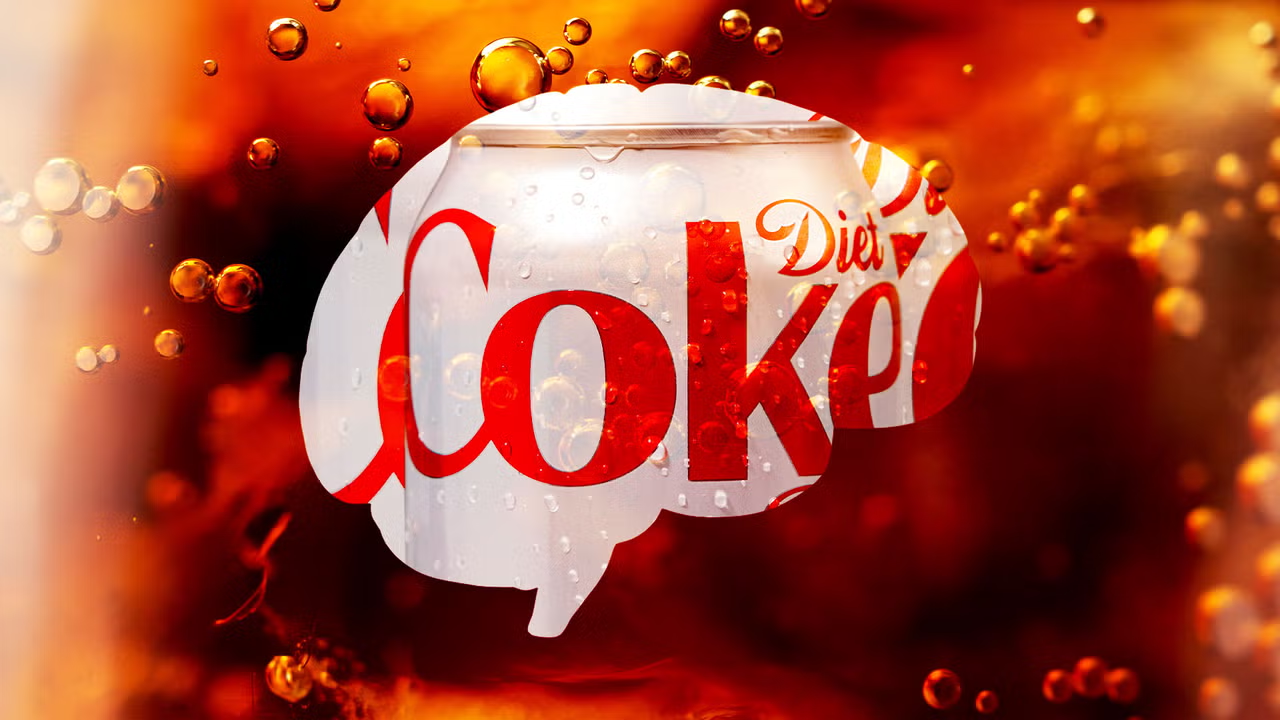
Your daily diet soda fix could be doing more harm than good.
Hardly the first study to scrutinize the health issues related to artificial sweeteners, a recent study has found that consuming high amounts of low- and no-calorie sweeteners is associated with an accelerated rate of cognitive decline. That led the researchers behind an updated study, published last month in the journal Neurology, concluded that there could be long-term harm from regular consumption of these sweeteners.
Based on a roughly eight-year study, the team tracked the cognitive decline of nearly 13,000 adults in Brazil based on how much low- and no-calorie sweeteners they consumed. They found that there was a gap of about 1.6 years of brain aging between those people who consumed the most and least sweeteners.
“Consumption of aspartame, saccharin, acesulfame k, erythritol, sorbitol, and xylitol was associated with a faster decline in global cognition, particularly in memory and verbal fluency domains,” wrote the researchers, led by a team from the University of São Paulo. They found that the highest consumption of these sweeteners was associated with faster decline among participants without diabetes along with faster decline in memory decline among those participants with diabetes.
HOW MUCH YOU DRINK MATTERS
Study participants consumed an average of about 92 milligrams of artificial sweeteners per day, though some participants consumed nearly twice that amount. For context, a 12-ounce can of many popular diet sodas contains up to 200 milligrams of sweeteners like aspartame.
Such sweeteners have previously been linked to adverse health outcomes that include an increased risk of type 2 diabetes and a higher risk of cardiovascular events. But the newfound link to cognitive decline might give some people cause or pause.
However, one of the study’s authors cautions that because it was an observational study, the researchers can’t prove that sweeteners alone caused the cognitive decline. And the results don’t suggest that drinking an occasional diet soda is harmful, as Claudia Kimie Suemoto of the University of São Paulo told Inc.
“Rather, they raise questions about the potential consequences of frequent, long-term consumption of artificial sweeteners,” Suemoto said. “Based on our study alone, I would not tell someone to stop drinking diet soda because of concerns about cognitive impairment.”
DIET SODA’S ‘MOMENT’
Despite years of scrutiny about their supposed health benefits and the surge in popularity of flavored seltzer waters, people have yet to kick their diet soda habits.
While Coca-Cola—the regular variety, that is—remains the most popular sofa worldwide, consumers are increasingly opting for lower-calorie options. In fact, unit case volume for Coca-Cola Zero Sugar surged 16% in the second quarter, followed by Diet Coke and Coca-Cola Light, which were up 7%, the Atlanta-based company reported last month.
Diet Coke, in particular, is “having its moment,” as CFO John Murphy told Yahoo Finance.
While moderation is key, Suemoto also recommended swapping diet drinks for water, sparkling water, or unsweetened coffee or tea.
And if caffeine is your vice, there’s some good news: A different study recently found that coffee consumption can lower your risk of cirrhosis, liver cancer, and liver-related death.
