
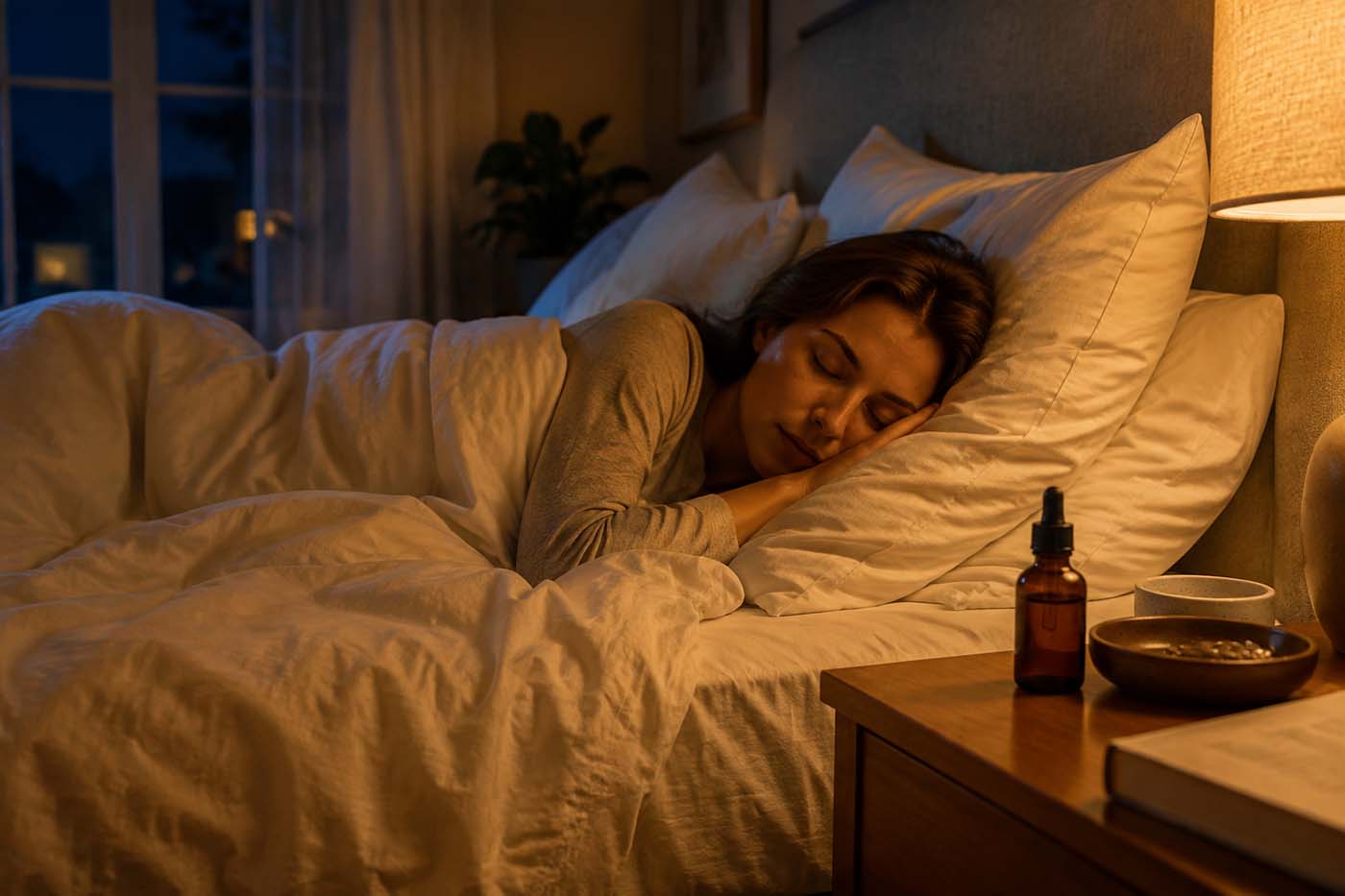
“Beauty sleep” sounds like something a grandmother invented to enforce bedtimes. It happens to be solid biology. At night, your skin flips from defense mode to repair mode, and the difference between waking up glowing and waking up gray depends largely on whether you set that repair shift up to succeed. Most people spend real money on morning products while treating the night, when skin is most receptive, as an afterthought. That’s backwards, and fixing it costs surprisingly little.
The night shift is real
During the day, skin plays goalkeeper: fending off UV light, pollution, and the general abrasion of being out in the world. After dark, with no threats to block, resources move to reconstruction. Cell division speeds up significantly at night, peaking in the late evening and early morning hours. Blood flow to the skin rises. Growth hormone, released mostly during deep sleep, drives collagen production, the scaffolding that keeps skin firm.
There’s a catch built into the same process: skin also loses more water overnight. Transepidermal water loss climbs while you sleep, which is why an unprotected face can wake up tight and papery even after a full eight hours. The repair crew works all night, but it works thirsty.
This is exactly why nighttime products exist as a category. Applying an anti-aging oil for your face before bed handles both sides of the overnight equation – the oil seals against that water loss while botanical actives feed the repair process during the hours skin is actually rebuilding. The same retinol or rich cream that would feel heavy or sun-sensitive at 9 AM becomes perfectly logical at 9 PM. Night isn’t just a convenient time for skincare; it’s the window when skincare meets the least resistance.
What an independent clinical study actually found:
- 33% improvement in skin hydration after 8 weeks of nightly use
- 16% visible improvement in skin firmness over the same period
- 90% of participants reported softer, more supple skin
- 86% saw a noticeable reduction in fine lines and wrinkles around the eyes
Quick tip: apply night products 20–30 minutes before lying down, not seconds before your face hits the pillow. Give them time to absorb and they end up in your skin. Skip the wait and a good share ends up in the pillowcase instead.
Sleep quality writes on your face
Products only assist; the sleep itself does the heavy lifting. Skimp on deep sleep and you cut growth hormone release, which cuts collagen production, and no serum compensates for that. Research on sleep-deprived skin shows measurably slower barrier recovery and, in one well-known study, observers rating short-sleepers as visibly less healthy and less attractive after just a few bad nights. Your coworkers noticing you look tired is not their imagination. A closer look at how to prioritize sleep for better health makes it clear how much of this comes down to sleep architecture, not willpower.
Cortisol adds the second punch. Short nights elevate the stress hormone, which degrades collagen and stokes the inflammation behind breakouts and dullness. A week of six-hour nights shows up on your face before it shows up anywhere else.
The basics matter more than any jar: a consistent bedtime, since skin runs on circadian rhythm just like the rest of you, a cool dark room, and a genuine wind-down. Building an actual healthy sleep routine pays off on your face as much as anywhere else. The evening skincare ritual itself doubles as one: two quiet minutes of massaging in an oil signals the day is over, to your brain as much as your face.
Small overnight upgrades that compound
A few low-effort changes multiply what the night can do. Silk or satin pillowcases reduce the friction that presses sleep creases into skin, creases that take longer to bounce back each decade. Changing pillowcases twice a week clears the oil and product residue that quietly feeds breakouts. Back sleeping, if you can manage it, spares your face seven hours of nightly compression; side sleepers can at least alternate sides.
Watch the bedroom air too. Heating and air conditioning both dry it out, compounding that overnight water loss, so a humidifier in winter pays for itself in spring skin. And the last hour before bed matters more than people think: alcohol close to bedtime fragments the deep sleep stages where growth hormone flows, trading tomorrow’s repair for tonight’s nightcap. Getting the fundamentals of sleep hygiene right handles most of this automatically, before a single product ever gets involved.
Working with biology instead of against it
The appeal of overnight skincare is that the hard part is already handled, since your skin knows exactly what to do between midnight and morning, and it’s been doing it your whole life. The job is simply not sabotaging it: seal in the water it loses, feed the repair it runs, sleep deeply enough for the hormones to flow, and remove the frictions that undo the work. Do that consistently and the mirror reports back within weeks. Beauty sleep was never a myth. It was an instruction.
Better Living may earn commissions through affiliate links and may occasionally feature sponsored or partner content. If you make a purchase through our links, we may receive a small commission at no cost to you.
