
England‘s Test team has entered a period of significant transition following the departures of Ben Stokes as captain and Brendon McCullum as head coach. Stokes’ surprise retirement during the third Test against New Zealand at the end of June forced the England and Wales Cricket Board (ECB) into an immediate leadership rethink, while McCullum’s exit also marked the end of the much-discussed “Bazball” era.
Instead of promoting vice-captain Harry Brook, England opted to bring back experienced batter Joe Root as Test captain, with former New Zealand skipper Stephen Fleming taking over as head coach. While the ECB believes the experienced duo can steady the side, Stokes has now publicly questioned the decision to overlook Brook for the role.
Ben Stokes opens up on Harry Brook’s captaincy snub
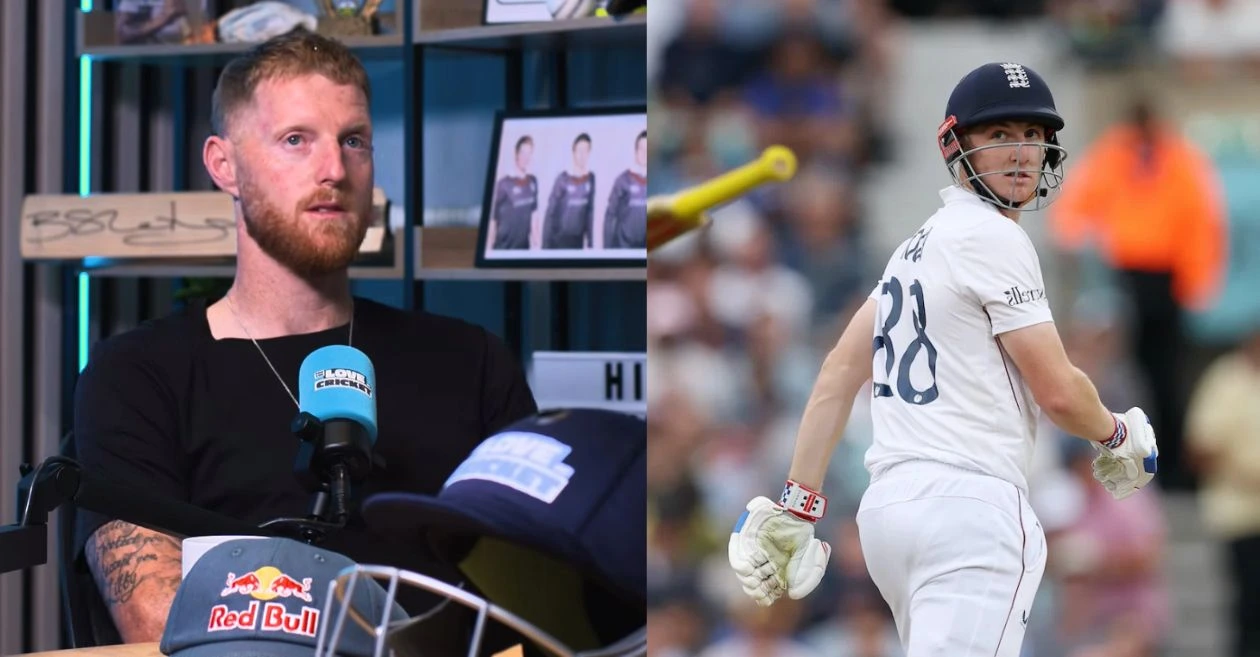
Stokes admitted he was surprised that Brook was not handed the Test captaincy despite serving as England’s vice-captain under his leadership. Speaking on the For The Love Of Cricket podcast alongside former teammates Stuart Broad and Jos Buttler, the retired all-rounder suggested the move could send the wrong message to a player who had already been groomed for leadership responsibilities.
According to Stokes, if a management group believes a player has the qualities to become captain, they should back that individual rather than hesitate when the opportunity arrives.
“If you think someone is going to be a good captain or a good leader, just give it to them. Brooky was made vice-captain. I’m not there anymore, but even when I missed that Test match, I was like, ‘he’s vice-captain?’ I sort of understood the reasoning why they were saying it, but I was still like, ‘what message is that sending to him?’” Stokes said.
Brook had widely been viewed as the natural successor after being appointed Stokes’ deputy. His rapid rise across formats and growing influence within the dressing room made him a strong contender, particularly as England looked toward building a new generation of leaders. However, England cricket managing director Rob Key chose experience over transition by recalling Root to the captaincy. Root previously led England in 64 Tests between 2017 and 2022 before stepping down after a difficult run that saw the team register just one victory in 17 matches.
Despite that challenging finish, Root remains England’s highest run-scorer in Test cricket and is regarded as one of the country’s most dependable figures. With England preparing for a demanding period, the ECB believes his familiarity with the role can provide much-needed stability.
Can the Fleming-Root partnership revive England’s Test fortunes?
The appointment of Fleming alongside Root represents a fresh attempt to rebuild England’s red-ball setup. Fleming arrives with one of the strongest coaching reputations in world cricket, having guided Chennai Super Kings through nearly two decades of sustained success by emphasizing calm leadership, consistency and long-term planning.
Together, Fleming and Root are expected to retain England’s aggressive intent while introducing greater tactical flexibility and discipline. Striking that balance will be crucial as England seek to recover from recent inconsistency. The task ahead, however, is far from straightforward. Historically, Fleming and Root have combined for only two wins in 29 Tests against Australia, highlighting the magnitude of the challenge before the 2027 home Ashes.
England’s immediate focus will be the three-Test series against Pakistan, where Marcus Trescothick is expected to oversee the side on an interim basis before Fleming fully takes charge. Beyond that lie demanding overseas assignments and the long road toward restoring England as a consistent force in Test cricket.
